
LEARNING TO LOVE
Narrative Portraits
The Narrative Portraits series elevates the visibility of Black Queer and SGL artists across various disciplines by featuring the work of emerging contemporary artists rendered through a digital lens which explore same gender loving narratives of self-acceptance as a rite of passage towards learning to love ourselves and each other.
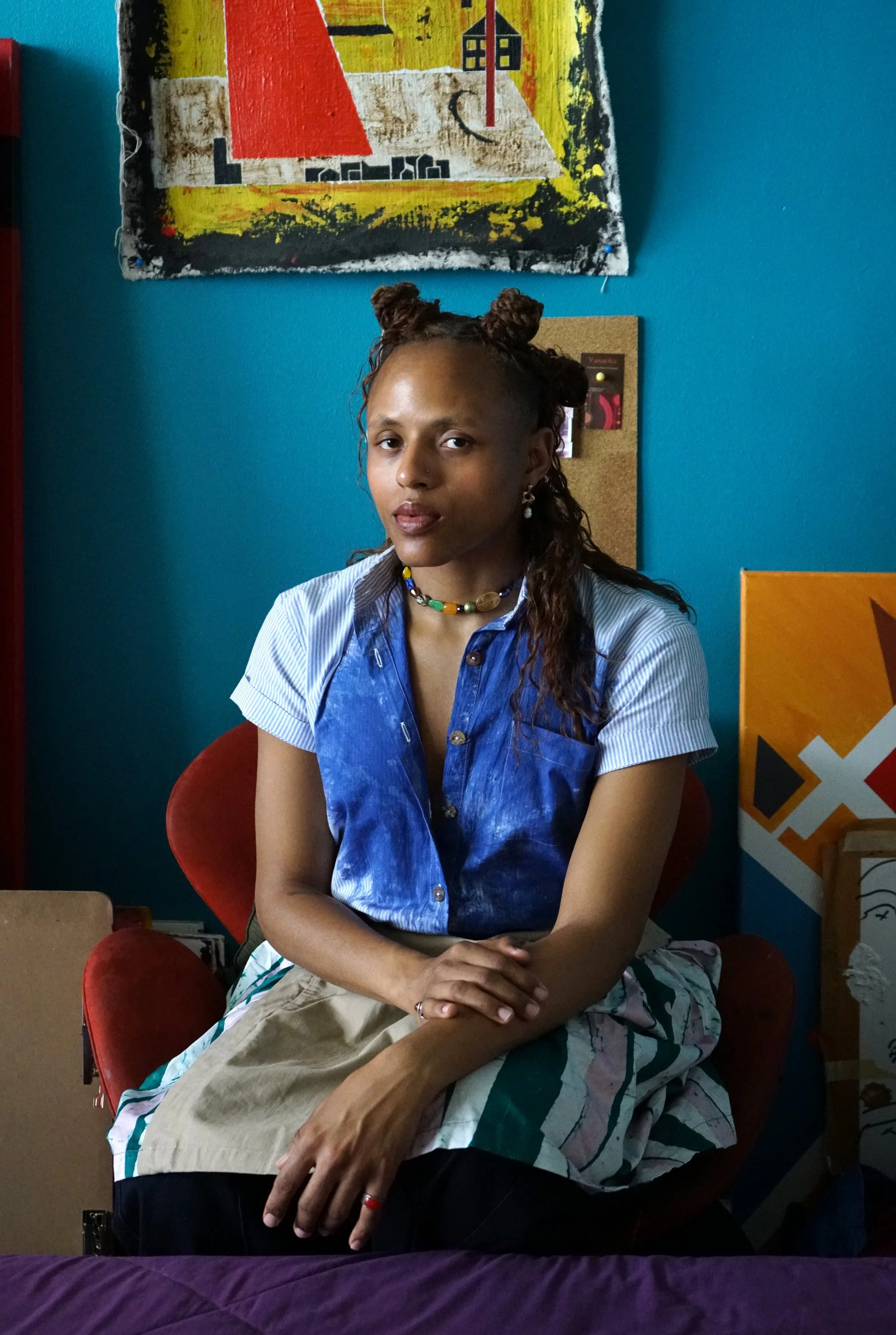
Tya Nelson (She/They)
Tya Nelson (she/they) is an interdisciplinary artist whose practice investigates the intersections of gender dysphoria, euphoria, desire, and trauma. Rooted in both the personal and communal narratives of transformation, Nelson’s work is deeply informed by a lineage of artists such as Keisha Scarville, Carla Williams, and Carrie Mae Weems. By bridging personal liberation with quiet curiosity, their work challenges dominant cultural narratives through the lens of lived experience.
A graduate of the International Center of Photography, Nelson has exhibited robustly across New York City, with presentations at the MoCADA House on Governors Island, Flushing Town Hall, and the Foley Gallery. Their practice has been supported by the School of Visual Arts Residency and a Ma-Yi Theater Company Micro-Grant. Nelson’s work has been featured in publications including WWD and VoyageLA, continuing a career-long dedication to unpacking the complexities of being seen and the architecture of the Black trans femme identity.
What inspires you to make art?
I am often informed by an accumulation of daily observation, personal identity, and the heavy realities of the world around me, as well as my lived experience navigating the boundaries, parameters, and permissions of what is considered a safe space. I am also moved by grief and remembrance when I look at news outlets and see memorials for trans siblings who, once more, have not made it home. Ultimately, my creative practice is fueled by internal landscapes of ache, want, and desire, alongside a dedication to exploring the unique joys and niceties privy to Black, Queer, and Trans identities.
How do you want your art to inspire others?
Conflicting things tend to come up when my work is received, or rather, the feedback varies based on the medium. In my photography practice, my work is approached from a perspective of intrusion, like peeking into an intimate moment where you are skating on the line of whether or not you were meant to be present. My paintings and works on canvas and paper, ironically, have the opposite effect. At first glance, they are inviting and vibrant, in a way that contrasts with how the photos rest in a subdued, almost quietude. Ultimately, I want the viewer to see that true lived experience exists within that exact duality.
As a Black trans femme, my life is both wrought with and blessed by kinship and fellowship. My lost loved ones and community members, again and again, become memorials, T-shirt designs, and another portion of an endless altar. Yet, it is also blessed with euphoria and the experience of, for the first time, feeling at peace in your body. It’s both simple and complicated, and I honor it because it is mine, just as much as it is familiar to the next girl in line for a re-up on estradiol. See your similarities, see your differences, but above all else, embrace both.
Does art play a role in learning to love yourself as a Black Queer person?
I don’t know where I’d be if it were not for my work as an artist. And I don’t mean this in the professional sense, though my career is certainly informed by my lived experience. My art acts as an essential lifeline and a vital tool for self-actualization, truth, and healing throughout my gender journey. It is paramount to me that my work is indicative of, or at the very least, speaks directly to my lived experience as a Black Queer person and a Black Trans Femme. My creative practice became a profound act of self-love that allowed me to come into myself honestly and on my own terms. When learning to love myself fully, art was the literal vessel that carried me to my truth; it allowed me to create pieces that were entirely devoid of harm, while producing images where I could quietly, and honestly, speak right to it.
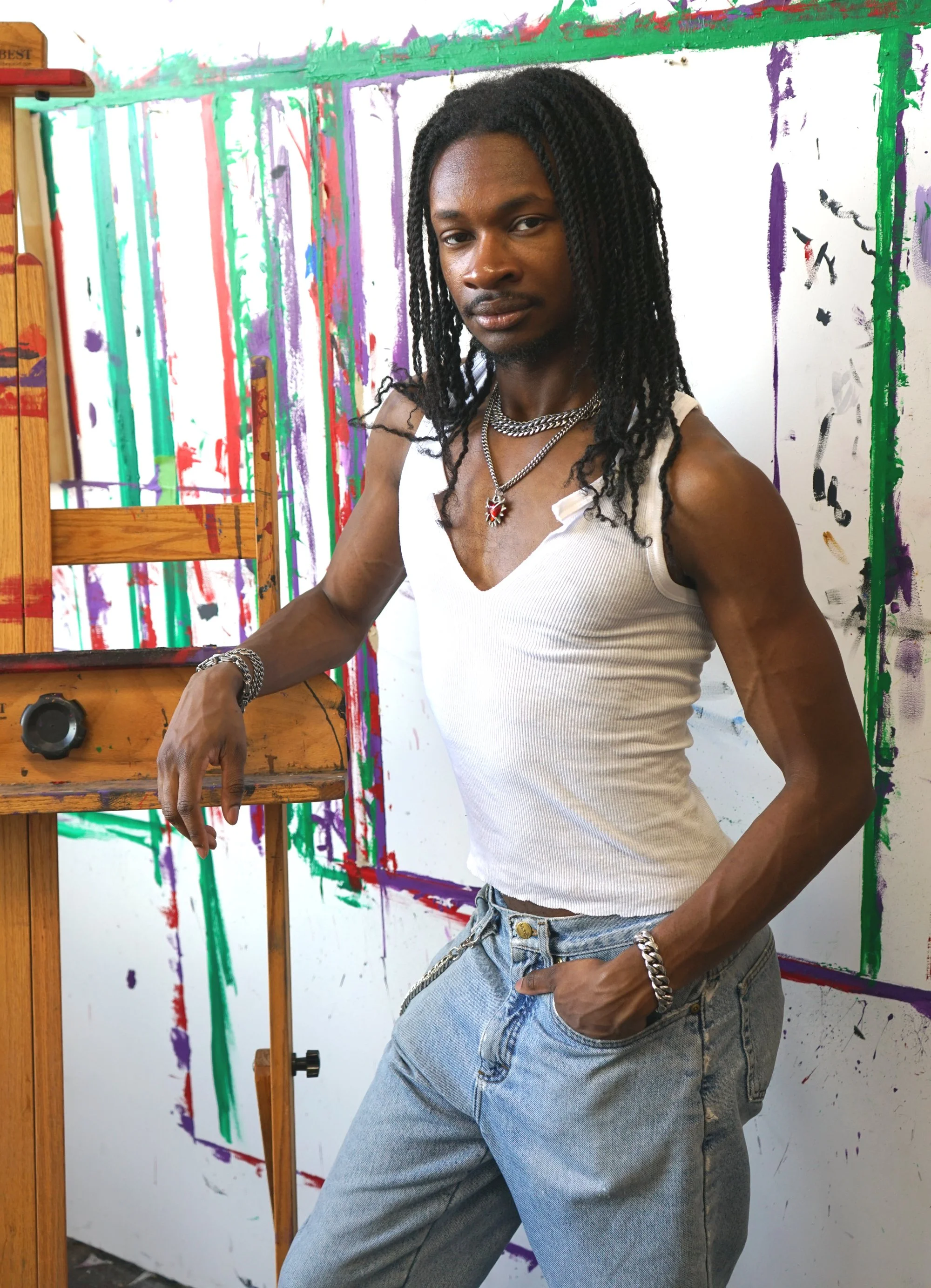
Moses Leonardo (They/Them)
Moses Leonardo (b.1998) is a multimedia artist born in New York City, New York and raised around the East Coast. They have a BFA in Painting from the Maryland Institute College of Art and their work focuses on queer identity, sexuality, race, spirituality, love and gender.
What inspires you to make art?
My art practice is heavily informed by Black queer culture. As an artist I use I’ve used paint, music, video-art, writing and any medium I’m interested in to talk about black queer love, sex, spirituality and gender expression.
How do you want your art to inspire others?
Ultimately, I want black queer people to feel seen in the same ways that black queer art helped me to feel seen and curious enough to interrogate my own identity.
Does art play a role in learning to love yourself as a Black Queer person?
Absolutely, whether viewing it or creating it, Black Queer art has helped me and many people with visibility, reifying identity, and hope. I learned to love myself through Black gay media, and I hope to create work and pass that torch on to the next generation.
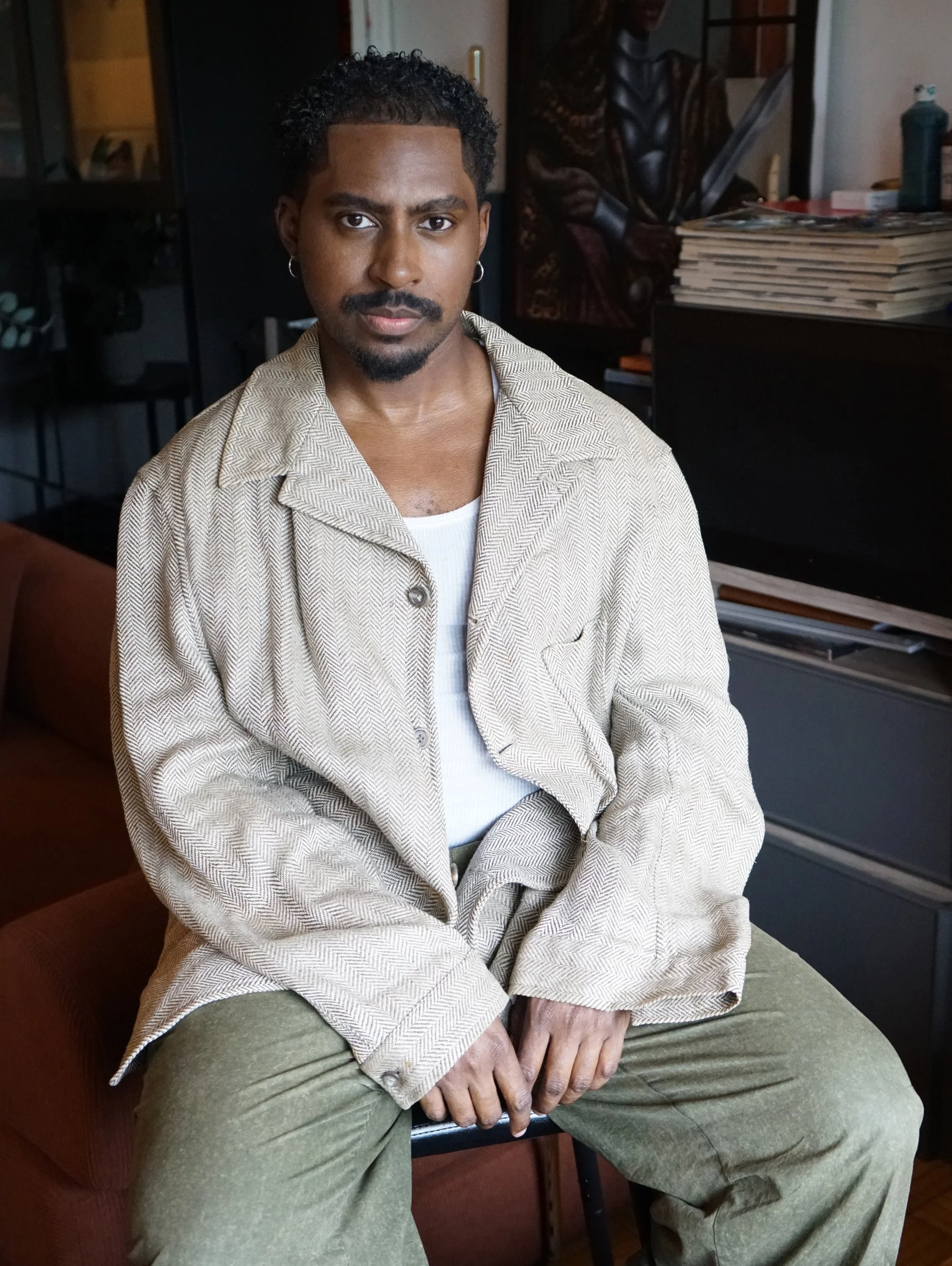
Osaze Akil Stigler (He)
Osaze Akil Stigler is a Brooklyn-based visual artist whose work explores identity, autonomy, and self-construction through a Black queer lens. Through portraiture, he creates emboldened images of Black figures situated in regal, intimate, and restful positions of power, often centering themes of tenderness, beauty, and self-definition.
Drawing inspiration from fashion, classical portraiture, and speculative worldbuilding, his paintings examine how Black and queer people imagine themselves beyond systems of fear, shame, and limitation. His work is rooted in the belief that representation can function as both refuge and possibility, offering space for affirmation, visibility, and emotional expansiveness.
Stigler’s work has been featured in New American Paintings, CR Fashion Book, Vogue Arabia, and Galerie Magazine, and is held in the permanent collection of the Orange County Museum of Art.
What inspires you to make art?
I’m inspired by the possibility of creating images that feel emotionally honest and liberating. A lot of my work comes from wanting to see Black queer people depicted with softness, beauty, intimacy, and power in ways that feel expansive rather than performative. Growing up, I rarely encountered images that reflected people like me existing freely, vulnerably, or at rest, so creating those images became deeply personal.
I’m also inspired by transformation: the ways people construct themselves, reclaim themselves, and imagine fuller versions of who they can become. Fashion, beauty, architecture, memory, relationships, and community all influence my work because they each shape how we understand ourselves and how we move through the world.
How do you want your art to inspire others?
I hope viewers, especially Black queer viewers, can see my paintings and feel a sense of affirmation, tenderness, or recognition that they may not often encounter elsewhere. Even when the work is glamorous or visually striking, I want there to be an emotional honesty underneath it.
More than anything, I want my work to encourage people to imagine themselves beyond fear, shame, limitation, or survival alone. I hope the figures in my paintings feel self-possessed, cared for, and free, and that viewers leave with a greater sense that they deserve those things too.
Does art play a role in learning to love yourself as a Black Queer person?
Absolutely. Art has been one of the primary ways I’ve learned to understand and accept myself more fully. Before I came out, there were parts of myself that I struggled to express openly, and creating became a way to process those feelings safely and honestly. Over time, my work evolved into a space where I could imagine myself—and people like me—outside of fear or suppression.
As a Black queer person, there can be immense pressure to make yourself smaller in order to feel safe or accepted. Art has allowed me to resist that. It has helped me embrace tenderness, femininity, vulnerability, and beauty as sources of strength rather than things to hide. In many ways, my practice is inseparable from my own process of becoming.
Thank you to our sponsors


Help us continue to
support Black Queer Artists.
Donate today!
All donations are tax-deductible